Industry Diagnostics
Materials Diagnostics & Failure Analysis
Representative defect examples from aerospace forging and high-temperature processing.
How I Read a Defect
Practical workflow used when evaluating material defects.
Observe
Read the morphology, location, and scale.
Trace
Connect the defect to likely process or material drivers.
Check
Use evidence to confirm or rule out the cause.
Correct
Translate findings into containment or prevention.

Hydrogen Porosity — Aluminum
Subsurface blistering caused by trapped hydrogen gas.
Likely cause
Hydrogen entrapment driving internal void growth.
Why it matters
Can reduce fatigue life and increase scrap risk.

Localized Pitting Corrosion — Aluminum Alloy
Localized corrosion pits forming after passive film breakdown.
Likely cause
Passive-film breakdown followed by pit growth.
Why it matters
Creates stress concentrators and crack-initiation sites.
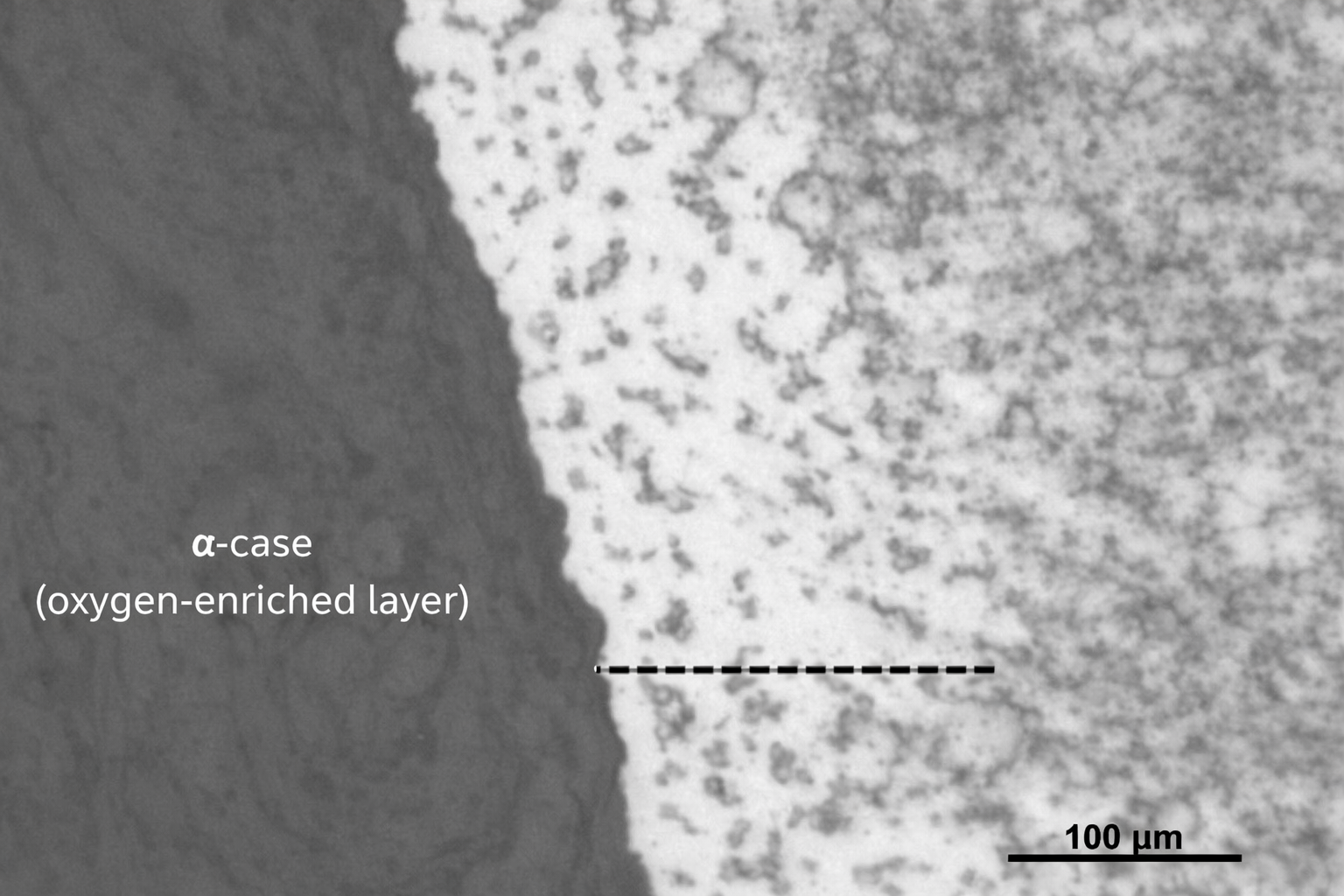
α-Case Surface Layer — Titanium
Oxygen-enriched brittle surface layer formed during high-temperature exposure.
Likely cause
Oxygen diffusion into the titanium surface.
Why it matters
Raises embrittlement risk and hurts fatigue performance.

Corrosion Damage — 304 Stainless Steel
Section loss and localized degradation visible in cross-section.
Likely cause
Aggressive-environment corrosion or interface breakdown.
Why it matters
Reduces wall thickness, durability, and surface integrity.