Industry Work
Materials & Thermal Diagnostics
Representative forge-related material issues reviewed through thermal measurement context, inspection evidence, and defect morphology. Examples include alpha case, hydrogen porosity, pitting, and surface damage identified during manufacturing screening.
Thermal Measurement & Inspection Context
Non-contact thermal measurements were evaluated alongside surface condition, viewing geometry, and environmental reflections to ensure temperature readings were interpreted in the correct physical context.

Thermal reference image: used to assess infrared reflections, viewing conditions, and non-contact measurement bias during inspection.
Inspection Interpretation
Surface preparation, lighting, and documentation quality directly affect defect visibility during inspection.

Inspection Preparation
Surface preparation and developer application influence feature readability during penetrant inspection.

Lighting & Surface Contrast
Reflective surfaces can obscure or exaggerate defect indications depending on lighting angle and inspection conditions.

Documentation Discipline
Before-and-after image records help preserve evidence and support consistent screening decisions.

Surface Clues
Visible marks and surface signatures can suggest prior handling, contact history, or localized loading.
Representative inspection images shown without customer-specific identifiers.
Forge Material Issues & Metallurgical Review
Representative defect morphologies observed in high-temperature alloy components.

Hydrogen Porosity — Aluminum
Subsurface blistering associated with trapped hydrogen gas and internal void development.
Likely cause
Hydrogen entrapment driving internal porosity growth.
Why it matters
Can reduce fatigue life and increase scrap or rework risk.

Localized Pitting Corrosion — Aluminum Alloy
Localized corrosion pits forming after passive surface breakdown.
Likely cause
Passive-film breakdown followed by localized pit growth.
Why it matters
Creates stress concentrators and crack-initiation sites.
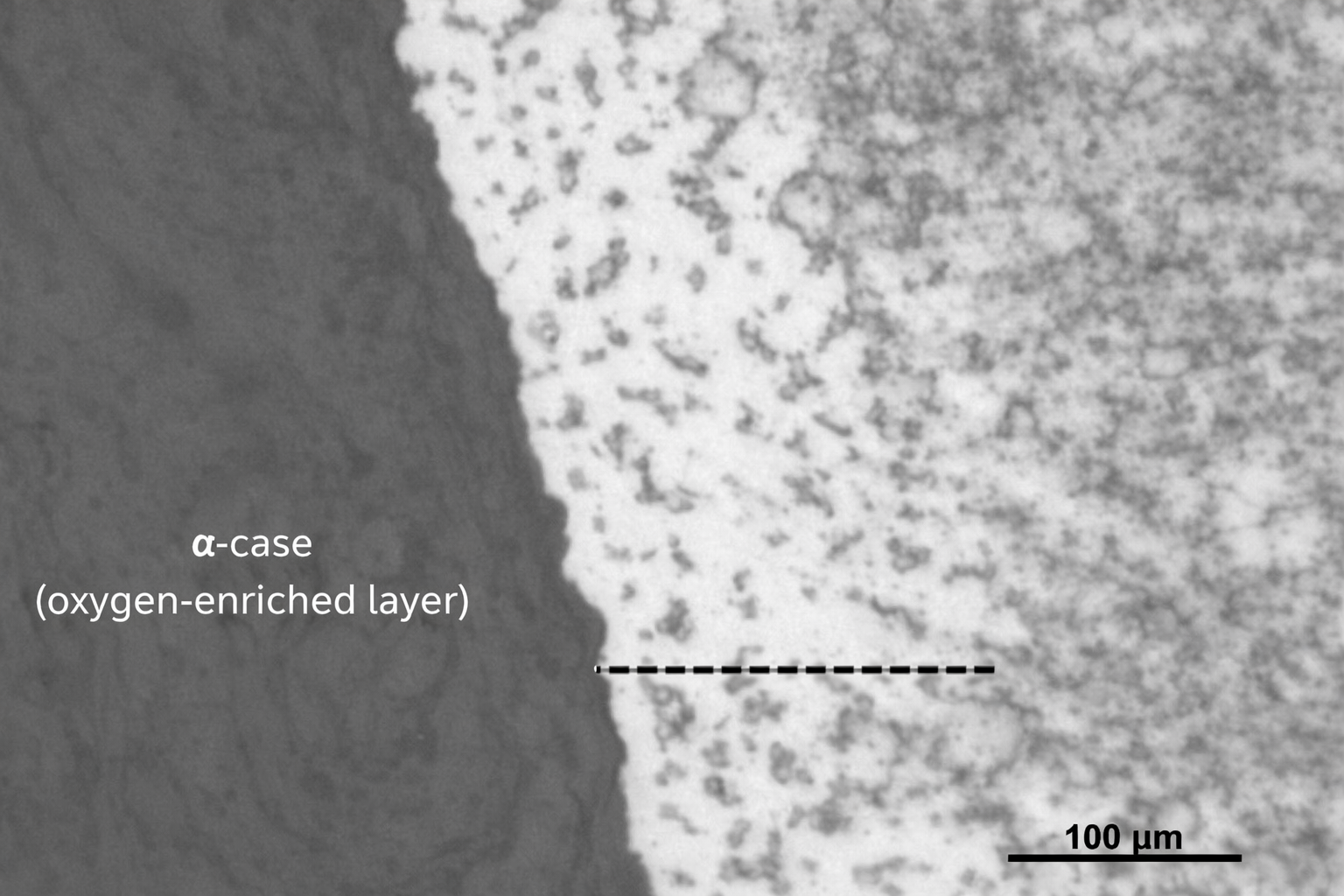
α-Case Surface Layer — Titanium
Oxygen-enriched brittle surface layer formed during elevated-temperature exposure.
Likely cause
Oxygen diffusion into the titanium surface during thermal exposure.
Why it matters
Raises embrittlement risk and reduces fatigue resistance.

Corrosion Damage — 304 Stainless Steel
Localized degradation and section loss visible in cross-section.
Likely cause
Aggressive-environment corrosion or interface breakdown over time.
Why it matters
Reduces wall thickness, durability, and surface integrity.
Representative inspection images shown without customer-specific identifiers.
Thermal Measurement & Inspection Context
Non-contact thermal measurements were evaluated alongside surface condition, viewing geometry, and environmental reflections to ensure temperature readings were interpreted in the correct physical context.
Thermal reference image: used to assess infrared reflections, viewing conditions, and non-contact measurement bias during inspection.
Inspection Interpretation
Surface preparation, lighting, and documentation quality directly affect defect visibility during inspection.
Inspection Preparation
Surface preparation and developer application influence feature readability during penetrant inspection.
Lighting & Surface Contrast
Reflective surfaces can obscure or exaggerate defect indications depending on lighting angle and inspection conditions.
Documentation Discipline
Before-and-after image records help preserve evidence and support consistent screening decisions.
Surface Clues
Visible marks and surface signatures can suggest prior handling, contact history, or localized loading.
Representative inspection images shown without customer-specific identifiers.
Forge Material Issues & Metallurgical Review
Representative defect morphologies observed in high-temperature alloy components.
Hydrogen Porosity — Aluminum
Subsurface blistering associated with trapped hydrogen gas and internal void development.
Likely cause
Hydrogen entrapment driving internal porosity growth.
Why it matters
Can reduce fatigue life and increase scrap or rework risk.
Localized Pitting Corrosion — Aluminum Alloy
Localized corrosion pits forming after passive surface breakdown.
Likely cause
Passive-film breakdown followed by localized pit growth.
Why it matters
Creates stress concentrators and crack-initiation sites.
α-Case Surface Layer — Titanium
Oxygen-enriched brittle surface layer formed during elevated-temperature exposure.
Likely cause
Oxygen diffusion into the titanium surface during thermal exposure.
Why it matters
Raises embrittlement risk and reduces fatigue resistance.
Corrosion Damage — 304 Stainless Steel
Localized degradation and section loss visible in cross-section.
Likely cause
Aggressive-environment corrosion or interface breakdown over time.
Why it matters
Reduces wall thickness, durability, and surface integrity.
Representative inspection images shown without customer-specific identifiers.