Experimental Thermal–Fluidic System Integration
Implemented and operated a rotating quartz-tube RF plasma setup integrating regulated gas handling, vacuum control, electrode configuration, and rotation. Authored structured operating documentation and performed integration checks to support safe, repeatable runs and stability assessment. (Detailed multiphysics modeling is documented on a separate COMSOL page.)

System Integration Overview

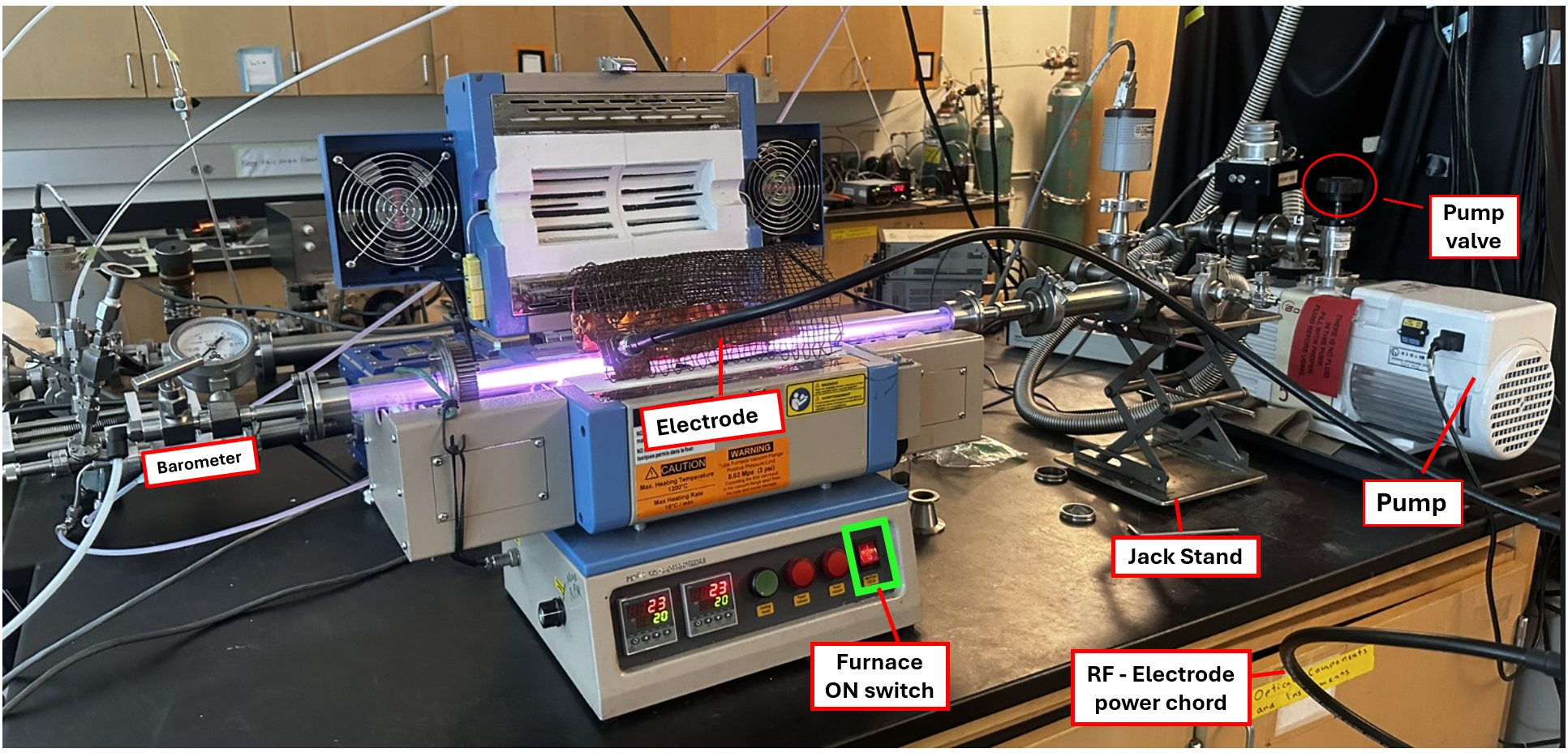
System Components Overview
Integrated thermal–fluidic hardware platform (RF plasma region, rotational mechanism, vacuum interface, controlled gas path).
  • Quartz tube reactor with rotational drive (≤12 RPM)
  • RF electrode integration and grounding path management
  • Hydrogen + argon gas handling with regulated flow
  • Vacuum pump-down and pressure stabilization discipline
  • Structured startup and shutdown sequencing

Stable operation required coordinated control of RF excitation, flow conditions, and rotation to maintain consistent exposure conditions.

Documentation & Operational Controls

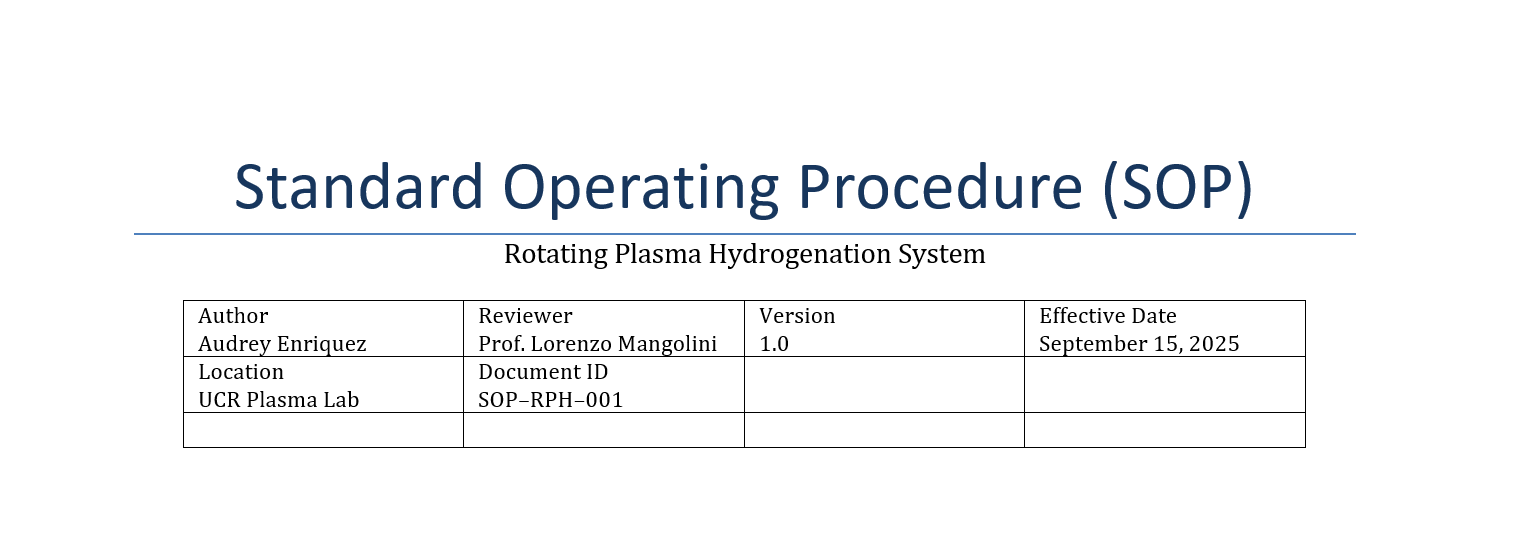
SOP Title Preview
Excerpt from authored Standard Operating Procedure (SOP). Operational limits and detailed steps are omitted in the public preview.

Authored structured operating documentation to support safe sequencing and repeatable runs in a multi-subsystem environment. Documentation emphasized verification steps, failure prevention, and operator clarity.

  • Pre-run verification (alignment, clearances, connections, readiness)
  • Flow stabilization and leak-check approach
  • RF enable hierarchy and safety-aware sequencing
  • Controlled shutdown and purge/vent mindset
Full SOP available upon request (or with lab permission), consistent with internal-document handling norms.

Electrical–Mechanical Interface Verification

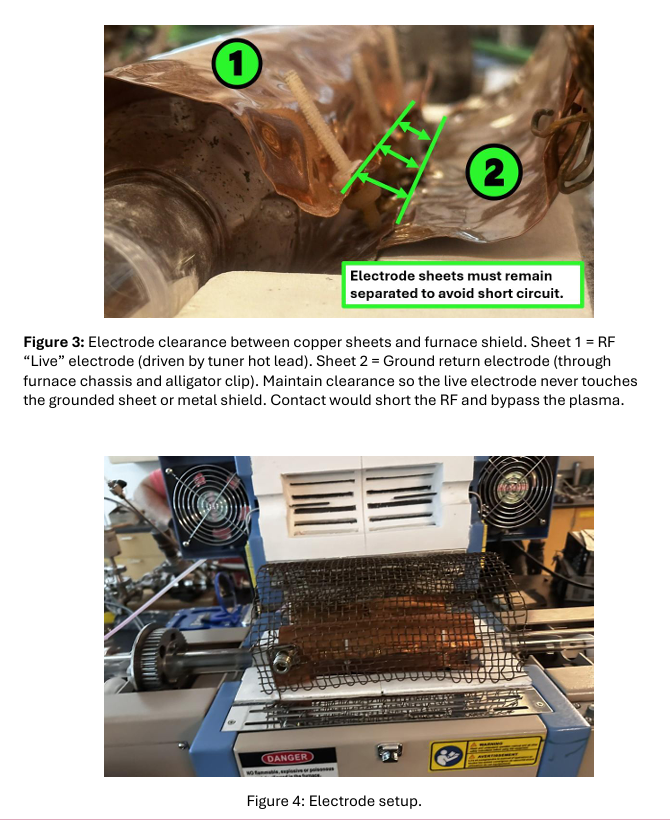
Electrode Arrangement
RF electrode clearance and isolation verification prior to ignition to reduce shorting and stability issues.

Verified mechanical alignment and electrical isolation to prevent unintended grounding paths and reduce instability risks, demonstrating cross-domain integration awareness across RF power, structural components, and shielding.

Stability Assessment & Engineering Mindset

Focused on interpreting observed behavior through a thermal–fluidic lens:

  • Reasoned about convection vs radiation dominance under different boundary conditions
  • Considered rotation effects on relative velocity and qualitative heat transfer behavior
  • Identified integration sensitivities (alignment, clearances, flow stability) that impact repeatability
  • Connected experimental observations to modeling pathways (documented separately in COMSOL work)

This project reflects applied systems engineering practice: integrating subsystems, documenting controls, and assessing stability under constrained operating conditions.

Full image
Full image preview